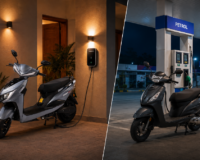
When most people look at an electric scooter, they see the obvious things first – the sleek body, the battery pack, the silent motor, maybe the digital dashboard lighting up when the key turns on.
What they don’t see is the tiny network of semiconductor chips quietly running the show.
It’s easy to think of scooters as mechanical machines. But modern electric scooters – especially a high speed electric scooter in India – are far more electronic than mechanical. Beneath the panels and wiring lies a small ecosystem of chips making thousands of calculations every second. Without them, the scooter wouldn’t even start.
Here’s how Semiconductor Chips help in driving the electric vehicle industry forward.
1. From Machine to Moving Computer
Traditional petrol scooters rely heavily on combustion and mechanical linkages. High speed electric scooters in India, on the other hand, depend on electronic intelligence.
A modern high speed scooty in India isn’t just powered by a battery and motor. It’s managed, controlled, optimized, and protected by semiconductor chips embedded across multiple systems.
These chips act like the scooter’s nervous system. They monitor temperature, regulate power flow, control acceleration, display real-time data, and even communicate with mobile apps.
What looks like a simple twist of the throttle is actually a chain reaction of micro-decisions happening inside silicon circuits.
2. The Brain Behind the Battery
One of the most important chip-driven systems inside any electric scooter is the Battery Management System, commonly known as the BMS.
The battery isn’t just a block of stored energy. It’s made up of multiple cells that must work together in balance. If one cell overheats or overcharges, performance drops – and safety risks increase.
This is where semiconductor chips step in. They constantly monitor voltage levels, temperature, charge cycles and current flow.
They make real-time adjustments to ensure efficiency and safety. Especially in a high speed electric scooter in India, where power output is higher, this precision matters even more. Without semiconductor control, battery life would shrink dramatically – and reliability would suffer.
3. Power Delivery: Smooth, Not Sudden
Have you ever noticed how electric scooters accelerate smoothly compared to petrol vehicles? That seamless push forward isn’t accidental.
Motor controllers – powered by semiconductor chips – regulate exactly how much energy flows from the battery to the motor. Instead of mechanical fuel combustion determining acceleration, it’s calculated electrical control.
For riders of a high speed scooty in India navigating traffic, that smooth control isn’t just comfortable – it’s safer.
The chips calculate torque demand instantly, adjusting output based on throttle input, load weight, incline, and speed. It happens so fast you don’t notice it. But it’s there. Every second.
4. Digital Dashboards & Smart Features
Today’s riders expect more than just movement. They expect information. Battery percentage, speed, trip distance, range estimate and service alerts. All of this data is processed through microcontrollers. Even features like anti-theft locking systems, app connectivity, GPS tracking, or ride diagnostics depend entirely on semiconductor chips.
For any electric scooter company aiming to offer connected, tech-forward mobility, chips are no longer optional. They are foundational.
Even a low speed electric scooter in India – designed for shorter commutes – still uses chips for battery protection and system control. While the power output may differ, the underlying intelligence remains essential.
5. Safety Isn’t Visible – But It’s Programmed
Electric scooters may look simple, but they contain layers of built-in safety logic.
- Overcurrent protection
- Short-circuit detection
- Thermal shutdown systems
- Regenerative braking controls.
These safety mechanisms aren’t mechanical fail-safes. They’re chip-driven instructions embedded inside the system.
The semiconductor components constantly scan for irregularities. If something falls outside safe parameters, the scooter responds instantly – sometimes by limiting power, sometimes by shutting down temporarily.
It’s the quiet work happening in the background that riders rarely think about.
6. Why the Global Chip Shortage Mattered
A few years ago, the global semiconductor shortage disrupted industries worldwide – from smartphones to cars. Electric vehicle manufacturing was heavily impacted.
This shortage made something clear: EV production depends deeply on chip supply chains.
For any electric scooter company building scalable mobility solutions, access to reliable semiconductor sourcing is as critical as battery supply.
As India pushes toward domestic EV manufacturing growth, semiconductor development is becoming a strategic priority. It’s not just about innovation. It’s about resilience.
7. High Speed vs Low Speed – Same Foundation
Whether it’s a high speed electric scooter built for long urban commutes or a low speed electric scooter in India designed for campus or neighborhood travel, both rely on chips at their core. The difference lies in complexity and performance scale – not in dependency.
High-speed models require more advanced controllers and precision tuning because of higher power output and speed limits.
Low-speed models operate with simpler calibration but still need essential battery management and safety monitoring. In both cases, semiconductor chips remain the backbone.
8. The Future Is Even More Chip-Driven
As electric scooters evolve, the reliance on semiconductor technology will only grow.
Upcoming developments may include:
- Advanced ride analytics
- AI-assisted energy optimization
- Predictive maintenance alerts
- Integrated smart charging networks
The shift from mechanical mobility to intelligent mobility is already underway. What used to be just transportation is now becoming a smart device on wheels.
9. The Invisible Engine of the EV Revolution
When riders choose electric, they often focus on savings, sustainability, or style. Those are important. But behind those visible benefits lies invisible technology.
Semiconductor chips make electric mobility efficient. They make it safe, scalable and intelligent.
Without them, even the most advanced high speed scooty in India would simply be a battery and motor without coordination. The EV revolution isn’t just powered by lithium or electricity. It’s powered by silicon.
And as electric mobility continues to grow across India, those tiny chips will remain the silent force keeping every ride smooth, safe, and smart.