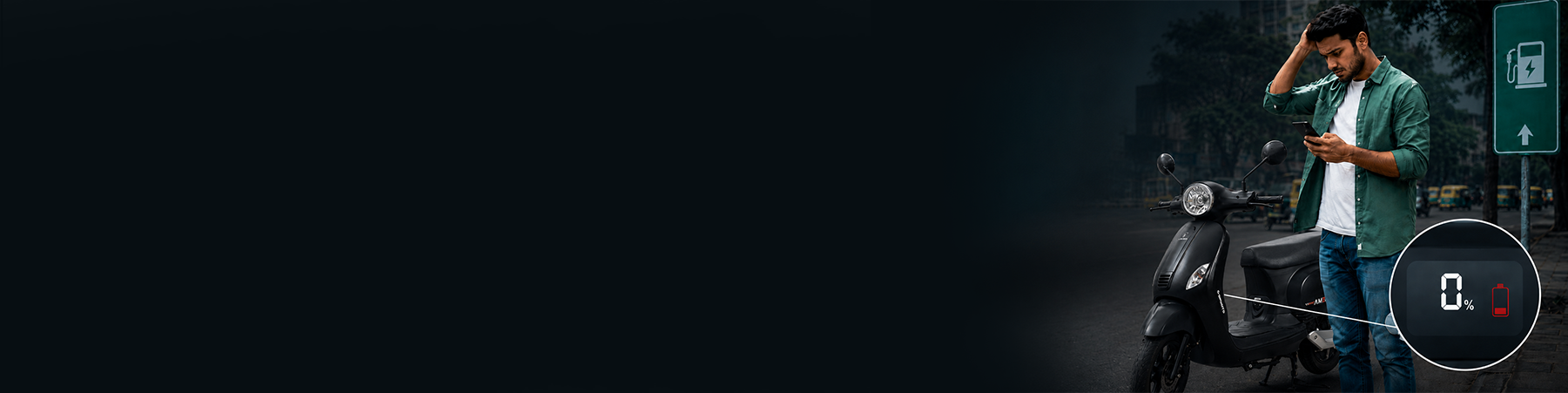
Range anxiety. That’s what it is called in electric scooter battery life – the fear of your vehicle running out of charge before you reach where you’re going. It sounds technical but it’s actually a very simple, very human worry. What if I’m stuck? What if it dies on me? What if there’s no charging station nearby? For anyone considering a high speed electric scooter in India for the first time – especially if this is going to be your first vehicle, period – these questions aren’t silly. They’re the exact things that make people hesitate at the dealership and walk out without buying. The problem isn’t that people don’t want EVs. The problem is that nobody sits them down and explains the basics clearly. So that’s what we’re doing here. A simple, no-nonsense answer to a question that deserves one.
Let’s get the big fear out of the way first.
Your electric scooter isn’t going to shut off without warning in the middle of a busy road. That’s not how it works. But if you’ve never owned an EV before, nobody’s told you that – and the internet is full of vague advice that doesn’t actually help.
So here’s a straightforward answer to the question you’ve been Googling.
1. Your scooter warns you. Multiple times
Every decent electric scooter on the market today – including ours – gives you a series of warnings as your battery level drops. You’ll typically get alerts at 20%, 15%, and sometimes even at 10%. The dashboard display, indicator lights, and in some models, the companion app on your phone – all of them will let you know it’s time to head home or find a charging point.
Think of it like your phone. You don’t wake up one morning to a dead phone with zero warning. You see 20%, you see 10%, you see the red bar. Same logic.
2. What actually happens when the battery hits zero?
Here’s the part nobody explains properly.
When your Lithium-ion battery for electric scooter runs critically low, the scooter doesn’t just die like a petrol scooter sputtering out of fuel. What happens instead is a gradual reduction in power. The scooter slows down. The top speed drops. You’ll feel it losing punch – and that’s by design. The system is conserving the last bit of charge to get you as far as possible, safely.
Eventually, if you keep riding past every warning, the scooter will come to a gentle stop. No dramatic engine cutoff. No skidding. It just… stops moving. You can still steer, still brake, still control the vehicle. It’s undramatic, which is exactly the point.
3. Okay, so you’re stranded. Now what?
First – you’re probably not stranded. Most electric scooters in India today offer 80-120 km on a full charge. The average daily commute in Indian cities is about 25-30 km. So unless you forgot to charge for three days straight, running out mid-ride is unlikely.
But let’s say it happens. Maybe you took a detour. Maybe the traffic was brutal and the battery drained faster. Here’s what you can do.
Push it home. High speed electric scooters in India are lighter than most petrol scooters – typically 80-100 kg versus 110-120 kg for a petrol model. There’s no engine resistance when the battery is dead, so pushing it to the nearest charging point or back home is easier than you’d think. Not fun, sure. But doable.
Call for a pickup. Most EV brands today, including e-Sprinto, have roadside assistance options. A quick call and someone can bring a portable charger or tow the scooter to the nearest service point. It’s not glamorous, but it works.
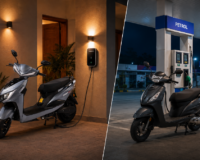
Top up at any plug point. This is the part petrol scooter riders don’t think about. You can’t carry a jerrycan of petrol easily. But electricity? It’s everywhere. A friend’s house. A shop. An office. If you have a removable Lithium-ion battery for electric scooter, you just pull it out, carry it inside, and plug it into a regular 5-amp socket. Even 15-20 minutes of charging can give you enough juice for a few more kilometres.
The real question: how do you make sure this never happens?
Charge at night. That’s it. That’s the habit
Plug your scooter in when you get home, the way you plug in your phone. By morning, you’ve got a full charge – and for most riders, that single charge covers two to three days of normal use – that’s the electric scooter battery life. You’re not hunting for charging stations. You’re not planning routes around battery levels. You’re just… riding.
If your daily commute is under 40 km – and for most people in India, it is – you’ll probably charge every second or third night. Some riders go four days between charges. It depends on your riding style, the terrain, and whether you’re in eco mode or full-speed mode. But the point is, range anxiety sounds scary until you experience how little you actually use per day.
A note on battery health over time
Here’s something worth knowing. Like any lithium-ion battery – your phone, your laptop – an electric scooter’s battery does degrade slowly over time. After about 3-4 years of heavy daily use, you might notice the range dropping by 15-20%. That’s normal.
Most manufacturers offer battery warranties of 3-5 years. At e-Sprinto, our batteries are designed to handle Indian conditions – heat, humidity, rough roads, the works. And when the battery eventually does need replacing, it’s a swap, not a rebuild. You don’t need to buy a new scooter. Just a new battery pack.
The bottom line
Running out of battery on an electric scooter is a lot less dramatic than running out of petrol on a regular one. You get multiple warnings, the scooter slows down gradually, and when it stops, it stops gently. You’ve got options – push it, charge it at any socket, or call for help.
But honestly? If you charge overnight like you charge your phone, you’ll probably never face this situation at all.
The fear is bigger than the problem. And once you’ve ridden electric for a week, you’ll wonder why you were worried in the first place.