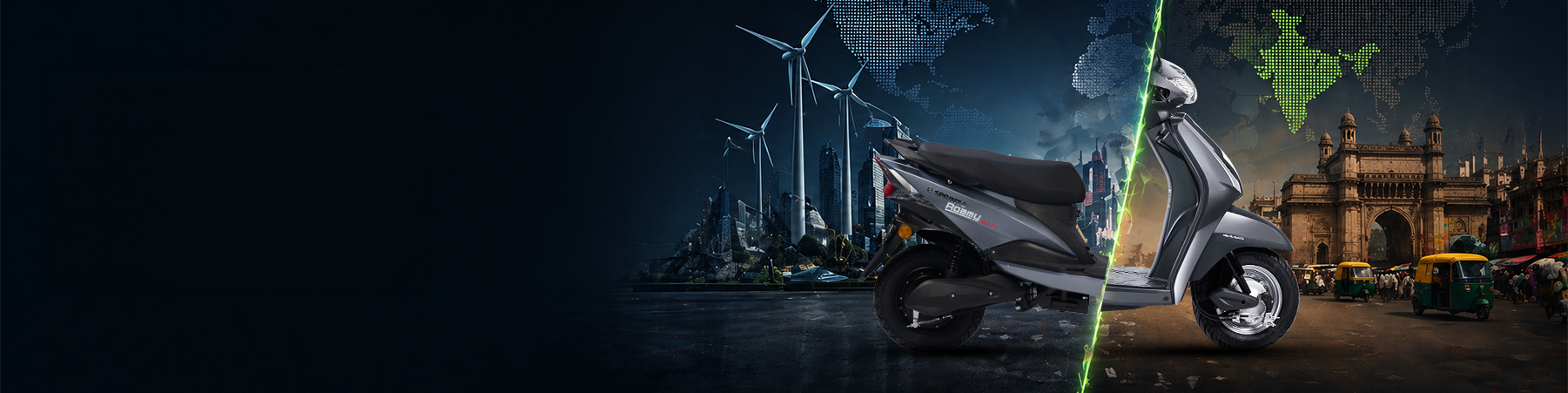
Talk to anyone in Europe about EVs and the conversation turns to deadlines. 2030. 2035. Petrol bans. In the US, it’s all about charging stations and tax credits. China? They’re just out-building everyone, full stop.
Then you get to India. And nothing quite fits. We’re not behind. We’re not ahead either. We’re doing this our own way, and honestly, that’s the only way it was ever going to work here.
At e-Sprinto, we’ve watched this play out up close. EV adoption in India isn’t one neat trend. It’s a bunch of things happening at the same time – how people get to work, what they can actually afford this month, what their bike needs to survive on a Monday morning in Bengaluru traffic. It’s not tidy. But it’s real, and that’s what makes it stick.
Nobody Here Is Buying an EV to Save the Planet
That sounds harsh. It isn’t.
In a lot of countries, EV adoption rides on climate policy. Government pushes, people respond. The narrative is built around emissions and timelines.
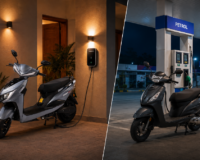
In India, the conversation starts somewhere else entirely. It starts at the petrol pump.
When someone walks into a showroom here, they’re not asking about carbon footprints. They’re asking the practical stuff. Will this thing make it through my commute? How much will I save every month? What happens if it rains? Can I charge it at home, or am I going to be stuck looking for a charger when I’m already late?
That’s the real test. And it changes everything about how this market grows.
You don’t sell EVs in India through awareness. You sell them through usefulness. The day a rider stops thinking of their scooter as “the electric one” and just thinks of it as “my scooter” – that’s the day you’ve actually won.
Two-Wheelers Are Doing the Heavy Lifting
Globally, when someone says “EV,” they’re picturing a Tesla. Or maybe a BYD. A car, basically.
In India, that picture is wrong.
Two-wheelers are how this country moves. Not as a hobby, not as a backup option – as the main thing. People ride to work. They ride to drop their kids at school. They ride to deliver biryani at 11 PM. Entire livelihoods sit on two wheels.
So it makes sense that this is where electric mobility is taking off first. City trips are short. They’re predictable. They repeat every single day. That’s exactly the use case electric scooters were built for.
We’ve seen it ourselves. The riders who stick around aren’t the ones chasing the latest tech. They’re the ones who realised, three weeks in, that they hadn’t been to a petrol pump and didn’t miss it.
Money Talks. Loudly.
This is the bit a lot of global EV brands miss when they look at India.
Here, cost isn’t one factor in the decision. It’s the factor. Or at least it’s the first one, the second one, and probably the third.
In wealthier markets, buyers are okay paying more upfront because they trust the long-term math. In India, that long-term math has to start working from month one. Maybe month two if the product is really good.
So conversations end up being about running cost. Maintenance. Resale. What it costs to actually own the thing for two years, not just buy it. Riders aren’t impressed by spec sheets. They want to know what their neighbour’s experience has been.
And this is exactly why a High Speed Electric Scooter in India gets judged differently than one in Germany or California. It’s not enough to be fast. It has to be fast and worth it. Performance has to come with a number that makes sense on a middle-class budget. For any electric scooter company trying to crack this market, that’s the whole game. Build trust on cost first. Everything else comes after.
The Charging Problem Isn’t Really a Problem
You’ll read a lot about how India’s charging infrastructure is “not ready.” Compared to Europe? Sure. But that comparison is misleading, and here’s why.
Two-wheelers don’t need what cars need.
Most riders charge at home, overnight. Plug it in, go to sleep, wake up to a full battery. It’s basically how you treat your phone. The whole “range anxiety, find a fast charger” panic that defines EV cars in the West? It mostly doesn’t apply to scooters.
For high-mileage users – the delivery folks racking up 150 km a day – battery swapping has stepped in. Pull up, swap a depleted pack for a fresh one in under two minutes, get back on the road. It’s not the system anyone predicted five years ago, but it’s working.
The infrastructure here is just shaped differently. Distributed. Quieter. Less impressive on a press release. Way more useful in real life.
People Buy EVs Because They Solve a Problem
In other markets, EVs get marketed as aspirational. Sleeker. Smarter. The next thing.
That pitch falls flat here.
Indian riders aren’t buying EVs to upgrade their identity. They’re buying them because something specific in their life isn’t working, and an EV fixes it.
Daily commuter? It’s the fuel bill. Delivery rider? It’s the per-kilometre cost killing margins. Fleet operator? It’s the math across 200 bikes that suddenly makes sense.
That’s why fleet adoption is actually outpacing individual buying in a lot of categories right now. The savings are concrete. They show up in spreadsheets. There’s no convincing required.
This is also why Indian EV growth doesn’t look like a clean upward curve. It looks like a bunch of small fires lighting up at once, each for its own reason. Hard to chart. Almost impossible to stop.
Tech Is Great. Until It Isn’t.
Globally, EV tech is in an arms race. More screens. More automation. More features nobody asked for.
Indian riders care about tech, but the test is simpler: does this make my day easier or harder?
App connectivity, digital dashboards, smart locks – all of it lands well. As long as it works without making the rider feel stupid. The second it needs a YouTube tutorial, it’s lost.
Our take at e-Sprinto has always been that tech should disappear into the experience. The best feature is the one you stop noticing because it just does its job. Showing off complexity isn’t the goal. Removing friction is.
This Isn’t a Slow Story. It’s a Different One.
It’s easy to look at India’s EV numbers, compare them to Norway or China, and write us off as lagging. That’s a lazy read.
What’s actually happening is more interesting. Adoption is moving in layers. College kids switching to electric for college runs. Delivery riders ditching petrol because their boss did the math. Aunties in Coimbatore figuring out they save 2,000 rupees a month. Each of these is a small story. Add them up across millions of people, and the picture changes fast.
What gives this growth real legs is that it isn’t waiting on policy. It’s not riding a single trend. It’s just… happening, one decision at a time, as products finally start matching what people actually need.
Where We Fit In
We’ve never tried to build the most advanced electric scooter in the world. We’ve tried to build one that works in India.
That’s a different problem. It means thinking about the rider who’s doing 40 km a day on roads that weren’t really built for it. The fleet manager who needs uptime more than features. The first-time EV buyer who just wants to know it’ll start tomorrow morning.
We design around those people. Not around a glossy idea of who an “EV user” should be. Because in this market, that’s the only thing that earns trust – showing up, every day, without drama.
So What’s Next
India’s EV market is going to keep doing its own thing. It’s not going to mirror Europe or China, and it shouldn’t. The shape of this transition is being decided by what people can afford, what actually works on Indian roads, and what makes sense for someone earning an Indian salary.
The shift will keep building. Not because of a big announcement or a flashy launch – those rarely move the needle here. It’ll build because more riders, quietly, are switching over. One commute at a time. One delivery shift at a time.
And in the end, that’s the only kind of change that ever really lasts.